Skip to content

Runstad X ULI Northwest Networking Event Recap

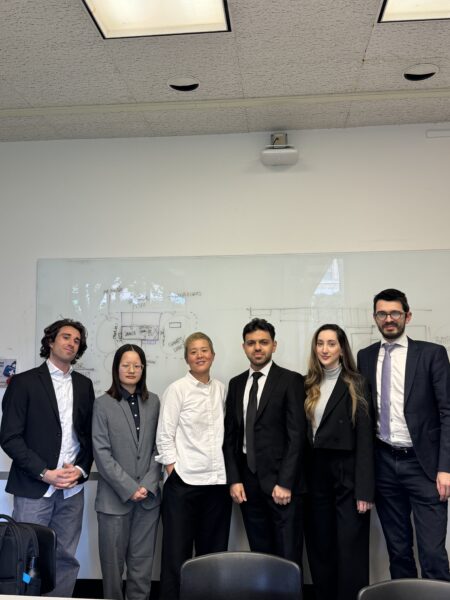
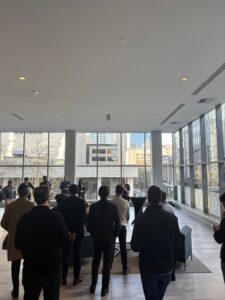
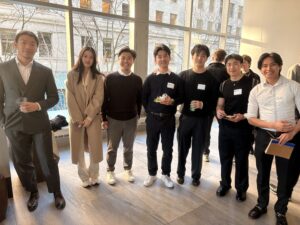
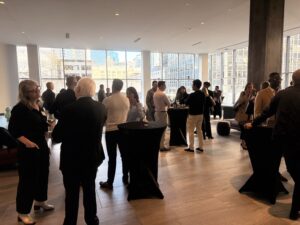
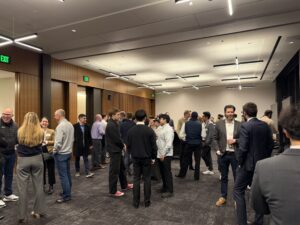
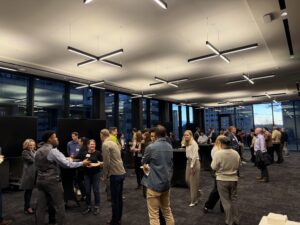
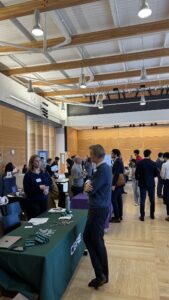
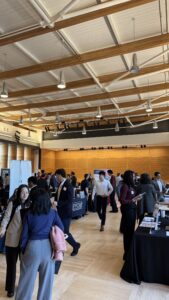
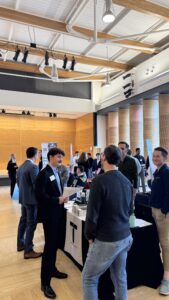
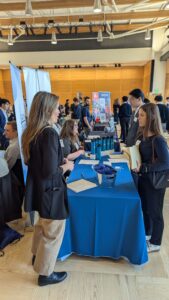
Runstad X ULI Northwest Networking Event Recap On the evening of April 9th, the Runstad Department of Real Estate partnered with ULI Northwest to host their first-ever joint networking event, drawing more than 50 MSRE and BSRE students, ULI members, and Runstad Advisory Board members for an evening of conversation and connection in the beautiful second-floor lobby of Rainier Square. The event featured three speakers with deep ties to the city’s built environment:

Rico Quirindongo, Director, Office of Planning and Community Development, City of Seattle

Salone Habibuddin, AVP and Chief Real Estate Officer, University of Washington

Carl Pierce, Director of Strategic Operations, Metropolitan Tract at UW Real Estate Development

The speakers touched on the rich history of the Seattle Metropolitan Tract, the 10-acre downtown parcel that UW has owned since its founding days, and its evolution into one of Seattle’s most significant developments. When UW relocated to its present campus in 1894, the Board of Regents chose to retain ownership of the original downtown site, a decision that gave rise to generations of landmark development. Today, the Tract is anchored by Rainier Square, the second-tallest building in Seattle, featuring office space, retail, and residential units, the very building in which the evening’s event took place.

Beyond history, the discussion centered on placemaking and the challenge of keeping downtowns dynamic amid the rise of hybrid work. The speakers offered a firsthand perspective on how Seattle’s urban core is being reimagined and what intentional, community-driven development looks like in practice. For Runstad students, the evening was a great chance to engage directly with both ULI members and Runstad Advisory Board members who are actively doing that work. As the next faces of the Seattle real estate industry, MSRE and BSRE students benefit greatly from the many new connections and new perspectives they gain by attending industry-focused events like this.

MSRE Alumni Spotlight: Jolin Fang

Alumni Spotlight: Jolin Fang, MSRE

Analyst, Blue Fern Development | Affiliate Instructor, University of Washington

Jolin Fang is an MSRE graduate who currently works as an Analyst at Blue Fern Development and an Affiliate Instructor at the University of Washington. After transitioning from a background in the tech industry, Jolin earned her Master of Science in Real Estate from the Runstad Department. She now combines her technical experience with real estate fundamentals to teach statistical analysis and data literacy to the next generation of industry professionals.

Q1: The Full-Circle Journey at UW

You’ve had a unique journey with the Runstad Department, moving from a student and Teaching Assistant in the 2023–2025 cohort to your current role as an Affiliate Instructor. Looking back at that transition, how has your perspective on the program’s value changed now that you are responsible for preparing the next wave of students for the industry?

A: Education has always been a core part of my identity. Throughout my career, I’ve gravitated toward teaching roles, whether as a tutor, mentor, or TA, which is why I was so eager to return as an Affiliate Instructor.

During my time as a student, I deeply valued how Runstad bridged the gap between the classroom and the industry. Bringing in active professionals to share real-world applications was incredibly impactful for me. Now that I’m on the other side, my perspective on that value has only deepened. I see my role as facilitating that same crossover: ensuring students master the fundamentals while understanding exactly how those concepts play out in the daily life of a real estate professional. I hope I can be the translation layer between theory and practice.

Q2: Leadership at the Tech-Real Estate Intersection

Your background includes significant leadership as a Program Lead for Harvard in Tech. You’ve seen firsthand how the industry’s ‘toolkit’ is shifting. For students who want to ‘future-proof’ their careers, what specific tools or technical skills should they be paying attention to right now?

A: My work with Harvard in Tech was a wonderful volunteer opportunity that allowed me to stay connected to my roots. I actually spent seven or eight years in the tech sector before transitioning into real estate. While real estate is traditionally a relationship-heavy industry which in many ways it will always be. I am fortunate to be at Blue Fern Development, a firm that is exceptionally entrepreneurial. We have an in-house technology team that allows us to provide unique value to our clients and the communities we serve.

In terms of “future-proofing,” I believe the players in Commercial Real Estate (CRE) who stand out over the next decade will be those who can effectively combine CRE fundamentals and the ability to leverage technology effectively; and that applies to CRE professionals too. However, it’s less about mastering one specific tool and more about maintaining a growth mindset. What’s more important is data literacy and technological curiosity. The sheer volume of new applications can be overwhelming. The key is to be comfortable working with tools you don’t fully understand yet, having the curiosity to learn them, and the vision to see how they can be applied to your specific ecosystem.

Q3: Translating Data Skills into Decision-Making

In RE397, you teach students how to use technical tools and statistical analysis. In your day-to-day role as an Analyst at Blue Fern, what separates someone who is merely ‘technically proficient’ from an analyst who can actually influence a firm’s final investment or development decisions?

A: The defining factor is the ability to combine analytical skills with the communication of actionable insights. In RE397, we cover fundamental statistical methodologies. These are crucial because they give you credibility. When stakeholders challenge your numbers, you must be able to clearly explain where that data came from, what its limitations are, and understand the numbers deep enough so you can defend your arguments.

However, data itself doesn’t make decisions, people do. Your managers, lenders, and JV partners aren’t necessarily data scientists; they want to know how your analysis informs a business decision. For example, they need to understand how a specific product mix affects absorption, and more importantly, how a single-digit shift in that absorption impacts the bottom line. You have to know your audience, understand their interests, and translate complex data into a narrative they can use to move forward.

Q4: Standing Out in the Class of 2026

For those graduating in Spring 2026, the market is increasingly competitive. What is one specific habit—technical, professional, or networking-related—that you consistently see in those who successfully break into high-level development roles in Seattle?

A: First, you must leverage the Runstad ecosystem. Our program is phenomenal at connecting students with industry leaders. The people who succeed are those who are intentional about fostering and maintaining those relationships.

Second, cultivate curiosity. We are living in a period of rapid change, and the real estate industry does not exist in a vacuum. Successful professionals stay up to date on the moving parts of the industry. As students, you have free access to a wealth of news and resources, use them. Being aware of current macro-economic environment isn’t just a bonus; it’s a requirement.

The Path to Blue Fern: A Quick Note on Networking

Q5: How did you find your current role?

A: It really started during my time in the MSRE program when I had the opportunity to intern at Red Fish Land under Scott Cameron, who serves on the Runstad Advisory Board. During my second year, I worked closely with Scott and many amazing colleagues. Through that experience, I was introduced to Blue Fern and after graduating from the program I joined the firm full-time. It was a great example of how the Runstad network and industry connections can naturally open doors for students.

The takeaway for students is that it all came back to the Runstad connection. I found the original posting through Eli Hellers’ weekly digest email.

When industry leaders in Seattle need talent, their first thought is often, “I’ll reach out to Runstad.” Make sure you are positioned to answer that call.

Event Recap: Annual Runstad Mentor/Mentee Mixer

The Runstad Department of Real Estate is pleased to share the success of our 2026 Mentor/Mentee Mixer, held on Thursday, February 26th at Safeco Plaza and generously hosted and sponsored by BXP Inc. This year’s gathering brought together more than 100 mentors, mentees, alumni, Runstad Advisory Board members, faculty, and staff—each contributing to a vibrant evening of connection and support for our current students. Attendees enjoyed light refreshments while continuing to build new professional connections and strengthen existing mentor-mentee relationships.

Our department is fortunate to benefit from an exceptionally engaged community of alumni and board members who invest their time, expertise, and energy into the professional growth of our students. Their commitment strengthens the foundation of our program and reinforces the value of mentorship as a cornerstone of career development.

We look forward to supporting the 2025–2026 MSRE and BSRE mentor/mentee cohorts throughout the year and to continuing this annual tradition. Additional events will be hosted to further cultivate these relationships and enhance the mentorship experience.

Acknowledgments

We extend our sincere appreciation to the team at BXP Inc. for their partnership, coordination, and event support.

We also offer a special thank you to Runstad Advisory Board member Kelley Lovshin for securing an exceptional venue and helping make this year’s mixer possible.

UW Real Estate Club Prologis Portside Development Tour

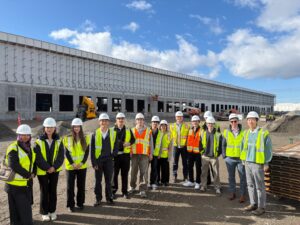
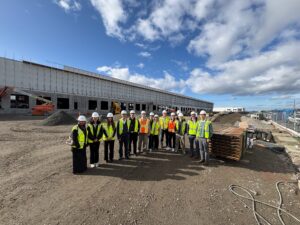
The UW Real Estate Club is happy to announce a collaboration with Prologis and have the opportunity to do a deep dive and site tour of their Portside Development located in Tukwila.

Prologis is a publicly-traded company spanning over 1 billion square feet globally across 19 countries, with many diverse departments, including development & investments, capital deployment, property management, and solar.

This site tour was hosted by Jake Maxwell and Adi Cohen. During the tour, students were introduced to the scale and complexity of industrial development and to how logistics continue to play a role in large, modern supply chains. The Prologis team walked students through key elements of the Portside Development, including zoning, site selection strategy, long-term leases, and the planning required for success.

Students learned about the importance of location advantages, including proximity to major transportation corridors such as I-5 and nearby industrial hubs, as well as operational considerations, such as height restrictions and permitting requirements with development near Boeing Field. This discussion also highlighted how projects require precise coordination across multiple logistics teams. In addition to development strategy, the tour provided insight into the financial side of industrial real estate, including project and leasing costs.

This event served as a valuable opportunity for students to hear directly from industry professionals and connect classroom concepts, better understand career pathways in development, acquisitions, and asset management. Students were also able to engage with professionals, network, ask questions, and gain exposure to one of the most active sectors in commercial real estate. Experiences like this continue to strengthen the connection between the Real Estate Club and industry partners while building professional networks.

Acknowledgments

We extend our gratitude to Jake Maxwell, Adi Cohen, and everyone at Prologis for hosting the site tour and sharing their time and expertise with our students. We also thank everyone involved in the Real Estate Club for taking time out of their day to make this event such a success!

Annual UW Real Estate Career Fair a Success

The Runstad Department of Real Estate is pleased to announce the successful conclusion of our 2026 Real Estate Career Fair, held this past Friday, February 6, at the HUB Lyceum. This year’s event marked a significant milestone for our program with record student engagement and appearances from our industry partners.

We were honored to host 27 real estate companies and organizations representing global firms, developers and local professional associations: CBRE, JLL, Microsoft, Greystar, Hudson Pacific Properties, Stewart Title, NAIOPWA, CREW and more were all in attendance.

Over 110 students, representing our undergraduate majors and minors as well as our Master of Science in Real Estate (MSRE) program, attended to explore internships and full-time career pathways.

Our annual Real Estate Career Fair provides a vital bridge between students and career pathways by offering face to face introductions between aspiring professionals and employers. The diversity of the participating firms spanning development, brokerage, and affordable housing offered our students a comprehensive view of the professional opportunities the industry has to offer.

This year we utilized the Handshake platform allowing both students and employers to easily register for the fair online.

Acknowledgments

We extend our sincere gratitude to Eli Heller and Nikita Anderson for their leadership in coordinating this year’s fair.

Furthermore, we would like to recognize the support from our student ambassadors, Corey Buckner (MSRE), Cameron Wilbur (BSRE), and Denny Fisher (BSRE), who were instrumental in the execution of the event.

To our employer partners: Thank you for your continued commitment to the next generation of real estate professionals. We look forward to the continued growth of our industry partnerships.


BSRE Alumni Spotlight: Carson Sharpe

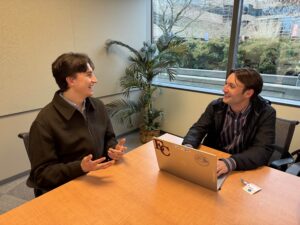
Interview by Denny Fisher, Runstad Dept of Real Estate 2025-2026 Undergraduate Ambassador

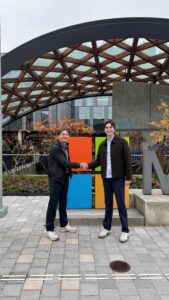
Carson Sharpe is a recent graduate of the UW Runstad Department of Real Estate’s Bachelor of Science in Real Estate program. He currently serves as a Real Estate Analyst at Microsoft. During his time at UW, Carson was deeply immersed in the program’s ecosystem, actively participating in the Real Estate Club, industry panels, and completing multiple internships. He successfully leveraged the department’s resources to transition into the corporate sector. In his current role, he supports the management of Microsoft’s global portfolio, focusing on strategic analysis and operational efficiency.

________________________________________

Q: Carson, you are currently a Real Estate Analyst at Microsoft, which manages one of the largest corporate real estate portfolios in the world. Could you give us a snapshot of your day-to-day responsibilities and the types of projects you are working on?

A: My primary responsibility as a real estate analyst on the land acquisition team is to conduct market research, perform risk analysis, and lead cross-functional teams to make informed decisions. My work is largely focused on supporting the infrastructure for Microsoft Cloud Services. It involves pulling in inputs from various stakeholders to ensure we are making the best strategic moves for the portfolio.

Q: Looking back at your time in the program, are there specific courses or technical skills you learned that you find yourself using regularly in your role at Microsoft?

A: Two classes immediately come to mind that are pertinent to my everyday work. First was Keith Leung’s class on Real Estate Investment. What I appreciated most was the emphasis on critical thinking; we weren’t just given a formula, we were given business cases. We had to perform our own research and formulate a defensible thesis on the quality of an investment—learning to see the “forest” of the market, not just the “trees” of the property.

Second was Vince Wang’s Real Estate Data Analysis (RE 397). That course emphasized the importance of interpreting and utilizing data to make decisions, which is central to what I do now.

Q: Success in this industry often requires more than just good grades. What did you do outside of the classroom—whether through the Real Estate Club, competitions, or networking events—that helped you stand out during the recruitment process?

A: First, my past internship experiences were vital. They were an incredible opportunity to take what I was learning in school and apply it to the real world; everything “clicked” once I saw it in practice. I would recommend every undergrad prioritize getting an internship.

Second, I seized the opportunities provided directly by the Real Estate Department. I went to every career fair, in a suit, ready to talk to employers. It can be a little uncomfortable at first, but you have to do it to build the relationships that bring about opportunities. In fact, I met my current employer at a Runstad Department Career Fair.

Q: The UW Runstad Department is known for its strong ties to the local industry. How did the alumni network or mentorship opportunities impact your transition from student to full-time professional?

A: The adjunct professors provided incredible value because they are working professionals, not just academics. They provided insight from reality. For example, Jeff McCann would bring in examples from deals he was working on in real-time, which allowed us to see where “the rubber meets the road.” The real estate courses didn’t just teach the concept of a practice; they exposed me to the industry itself. Learning from a textbook is different than learning from a professor who shows you how the industry actually operates.

Q: Now that you are on the other side of graduation, what is one piece of advice you would give to a current student to help them maximize their time at UW?

A: You get out of it exactly what you put in. As I mentioned earlier: show up to things, do the extracurriculars, and try. You are going to fail more than you succeed at first—I faced plenty of rejection while going to career fairs—but I kept going. It is possible to just “get by” in the major, but you can get so much out of it if you push yourself.

The answer is always “no” unless you ask—whether that is asking for a job or asking professors for connections. Real Estate is a people business. When the time comes that people are hiring, if they already know you and what you are about, you are much more likely to succeed.

Real Estate Department Hosts Annual Speed Networking Event

On Thursday, November 6, the Runstad Department of Real Estate hosted its annual Speed Networking event, bringing together students from the Real Estate Major, Real Estate Minor and MS in Real Estate programs to connect directly with industry professionals. Employers from a range of sectors shared insights into their work while students practiced their networking skills, refined their elevator pitches, and explored internship and job opportunities. The event was a great success, fostering meaningful connections and helping students gain confidence in presenting themselves to future employers. The employers in attendance included Cushman & Wakefield, Greystar, Stewart Title and Goodman Real Estate. We are grateful to continue our strong partnerships with local real estate employers, in support of students’ professional development.